Showing posts with label Factors with uncertain. Show all posts

Tuesday, 29 December 2015

List of hospitals in Houston

Methodist Hospital          
 http://www.methodisthealth.com/

St. Luke's Episcopal Hospital
http://www.stlukestexas.com/

University of Texas M.D. Anderson Cancer Center
http://www.mdanderson.org/

Park Plaza Hospital
http://www.parkplazahospital.com/en-US/Pages/default.aspx


Memorial Hermann-Texas Medical Center
http://www.memorialhermann.org/locations/texas-medical-center/

Menninger Clinic
http://www.menningerclinic.com/

TIRR Memorial Hermann
http://tirr.memorialhermann.org/

San Jacinto Methodist Hospital
http://www.methodisthealth.com/sjmh.cfm?id=36844

Memorial Hermann Northwest Hospital http://www.memorialhermann.org/locations/northwest/

Memorial Hermann Memorial City Medical Center
http://www.memorialhermann.org/locations/memorial-city-medical-center-er/

Methodist Willowbrook Hospital
http://www.methodisthealth.com/willowbrook-hospital

Texas Orthopedic Hospital
http://texasorthopedic.com/

Texas Children's Hospital
http://www.texaschildrens.org/

Ben Taub Hospital
https://www.harrishealth.org/en/services/locations/pages/ben-taub.aspx

Memorial Hermann Katy Hospital
http://www.memorialhermann.org/locations/katy/

Lyndon B. Johnson General Hospital
http://www.lbj.uth.tmc.edu/

Intracare Hospital North
http://www.intracare.org/

West Houston Medical Center
http://westhoustonmedical.com/

Cypress Fairbanks Medical Center
http://www.cyfairhospital.com/en-


St. Joseph Medical Center
http://www.sjmctx.com/

The Woman's Hospital of Texas
http://womanshospital.com/

Westbury Community Hospital
http://www.westburyhospital.com/


Clear Lake Regional Medical Center
http://clearlakermc.com/

Memorial Hermann Memorial City Hospital http://www.memorialhermann.org/locations/memorial-city/

Monday, 11 November 2013

Side Effects of HRT

Side Effects of HRT

Hormone Replacement Therapy has some side effects. These side effects are negligible in comparison to the benefits it gives. Hence women should be encouraged to use ERT.

Does HRT have side effects similar to those of birth control pills


The use of HRT has been complicated for menopausal women as well as for prescribing doctors by the contraindications contained in the pharmaceutical data sheets. The similarity between the data sheets for oral contraception's and HRT preparations suggest that the contraindications for the former have been uncritically accepted for the latter.  This has led to the wide spread misconception that oral contraceptive and HRT preparations are similar with regard to contraindications as well as risk for side effects. Since estrogens play such an essential role in the health and well being of women, women should be en

couraged to use ERT so that they continue to enjoy the same quality of life they experienced before menopause.


Are there any drawbacks to HRT

Some patients complain that oral drugs sometimes aggravate menopausal problems.  This could be due to metabolism in the liver and the intestine, resulting in wide fluctuations in plasma hormone levels, changes in hepatic protein synthesis and perturbations of the haemostatic system.

Administering HRT with Transdermal Drug Delivery Systems

HRT is an effective method of easing the menopausal symptoms. Administration of HRT can be oral, parenteral, rectal, vaginal, topical and transdermal. Transdermal Drug Delivery is done through application of patches containing drug to skin. Know more about this method of application.

How is HRT administered

There are various ways of administering HRT. Some of them include: oral, parenteral, rectal, vaginal, topical and transdermal (through the skin).  These treatments can also be classified as oral, percutaneous and transdermal.


What are transdermal drug delivery systems

Transdermal (through the skin) drug delivery system is one way of administering HRT.  Other methods of administering HRT include oral, parenteral, rectal, vaginal and topical.

Transdermal applicators are the patches containing the drug.  They are flat, smooth, discrete and can be used for long term medication. Transdermal delivery systems are not just an alternative route of administration but they improve the therapeutic value of a drug and provide many other advantages including increasing compliance.

Transdermal therapy could be of two types: (a) Reservoir type: Those that control the rate of drug delivery to skin; and (b) Matrix type: Those that allow the skin to control rate of drug absorption.


Why is skin the site for transdermal drug delivery

Skin is one of the most readily accessible organs of the human body. It has a thickness of only a few mm.  Skin is a multi-layered organ composed of many histological layers.  Its three main layers are: the epidermis, the dermis and the hypodermis.

The epidermis is further divided into 5 anatomical layers. The outermost layer is the stratum corneum which is exposed to external environment. The transdermal permeation of neutral molecules at steady state can be considered as a process of passive diffusion through the stratum corneum in the interfollicular region.


General considerations for the use of Transdermal Drug Delivery systems 

The site selected for application should be clean dry and hairless e.g. estradiol patches are applied to buttocks or abdomen, nitroglycerine patches are applied to chest. Scopolamine behind ear. Because of possible occurrence of skin irritation, sites of application for patches are rotated weekly. 
Transdermal patch should not be applied to skin that is already irritated or act so as to ensure maximum absorption. 
Patches should be removed from its protective package being careful not to tear or damage patch. Protective backing should be removed to expose the adhesive layer and it should be applied firmly with the palm of the hand until it is secured in place. 
Patches may be left on when bathing or swimming. If the patch gets dislodged one must re-apply it or it may be replaced.


Benefits and Drawbacks of Transdermal Drug Delivery Systems

Transdermal Drug Delivery systems are the easiest way of ERT. There are some discomforts associated with this but its advantages outweigh the discomforts. Know about this in detail.

Possible discomforts of Transdermal Drug Delivery systems

Transdermal drug delivery systems could be unsuitable for drugs that irritate or sensitize skin. 
The natural limits of drug entry imposed by the skin's permeability indicates that relatively potent drugs are suitable only for transdermal delivery. 
Under various environmental conditions, adhesions of the system to different skin types sometimes result in technical difficulties. 

Advantages of Transdermal Drug Delivery systems

Avoids gastrointestinal tract difficulties during absorption caused by enzymes, drug interactions with food, etc. 
Suitable in instances like vomiting/diarrhoea where oral route is not desirable. 
Avoids first pass i.e. the initial passage of a drug substance through the systemic and portal circulation.
Provides the capacity for multi day therapy with a single application thereby improving patient compliance. Extends the activity of drugs having short half - life through the reservoir of drug present in the delivery system and its controlled release characteristics. 
Therapy can be quickly terminated by removal of the patch from the skin. 
Provides ease of rapid identification of medication in emergencies - non-responsive patients, unconscious or comatose patients. 
Less chances of over or under dosing as the result of prolonged preprogrammed delivery of drug at the required therapeutic rate. 

What is ETS

ETS is a new transdermal hormone replacement therapy that is supposed to be convenient, safe, low dosage estrogen therapy.  It is a once-a-week dosage with a matrix patch, and offers various benefits over the existing treatments:

Physiological low dose hormone
Avoids hepatic first pass
Convenient once a week treatment
Prevents and manages post-menopausal symptoms - early symptoms like depression, anxiety, vaginal dryness, osteoporosis and cardiovascular diseases.


Psychological Changes

Psychological Changes

Menopause causes many psychological changes in women. Anxiety, irritability and depression are some of the common psychological changes occurring in women, in menopause. Know the main cause of depression in women in menopause.

What are the psychological changes associated with menopause

Anxiety, irritability and depression commonly arise during the climacteric (around menopause time) and are usually the group of symptoms which are worse in the pre-menopause period i.e. a few years before periods cease.
 

Why does depression occur

Falling estrogen levels may reduce dopamine receptor sensitivity or reduce available tryptophan for serotonin synthesis, leading to reduced activity of central nervous system transmitters and consequent depression. Other causes of depression may also occur at the time of menopause. These include loss of reproductive potential, a perceived loss of femininity, marital disenchantment, the 'empty nest' syndrome and career disappointments.


Cardiovascular Diseases

Estrogen has a protective effect on cardiovascular disease in women, but during menopause this estrogen levels decreases thus making women susceptible to cardiovascular diseases. After menopause, women are more prone to heart diseases. Know more about this.

Does menopause increase the risk of heart diseases

Before menopause, heart diseases are uncommon in women who do not smoke, do not have hypertension, hyperlipidaemia (excessive saturated fats in their blood) or diabetes. It is five times more common in men than in pre-menopausal women but once menopause has occurred, the risk of heart disease in women approaches that in men, suggesting a role for the menopausing in this changed risk.

The etiology of heart disease is complex and incompletely understood. However, several studies on the effect of premature menopause on the incidence of heart diseases suggest that earlier the cessation of ovarian function occurs greater the risk of cardiovascular diseases. A role for estrogen deficiency in the etiology of this disease is strongly suggestive.


How does menopause increase the risk of heart diseases

High plasma levels of High-Density Lipoprotein (HDL) concentrations protect the heart (cardio-protective), whilst those of Low-Density Lipoprotein (LDL) concentrations increase the risk of heart disease.  Before menopause, serum LDL levels are lower and HDL levels are higher.  But after menopause, LDL levels increase significantly, and thereby increase the risk of heart diseases.


Do women run a greater risk of heart diseases than men

No.  Before menopause, serum LDL levels are lower in women than in men, and serum HDL levels are higher. Following menopause, LDL levels in women rise but do not exceed the levels in age-matched men.


What is the role of the estrogen in preventing heart diseases

Estrogen in pre-menopausal women has a protective effect on cardiovascular disease, probably mediated through it's effect on the HDL:LDL ratio.  But estrogen may work in other ways such as by a direct effect on blood vessels or by stimulating direct effect on blood flow in organs such as the skin, uterus, vulva and kidneys.


Changes in the Skeletal System (Osteoporosis)

There are many changes in the skeleton of women after menopause. Women have increased risk of osteoporosis. This is due to de-mineralisation of bone.

Is there a risk of osteoporosis because of menopause

Yes.  Approximately 50% of bone loss occurs in the first 5 to 7 years of menopause Thus, the risk of osteoporosis increases tremendously at menopause.


How does menopause affect the skeletal system (bones)

De-mineralisation of bone is potentially the most serious long-term consequence of human menopause. Peak bone mass is reached in the third decade of life. Thereafter there is a progressive reduction in bone mass, with an accelerated loss following menopause.  The precise mechanism of bone loss is uncertain. There is an increase in bone turnover, which disrupts the remodeling process, with bone resorption exceeding formation.

Vasomotor Problems - Hot Flushes

Vasomotor Problems - Hot Flushes

The most common symptoms of menopause are hot flushes and night sweats. These symptoms occur in majority of women. Wh
at are hot flushes? When do they occur ? Know answer to these common questions.


What are hot flushes

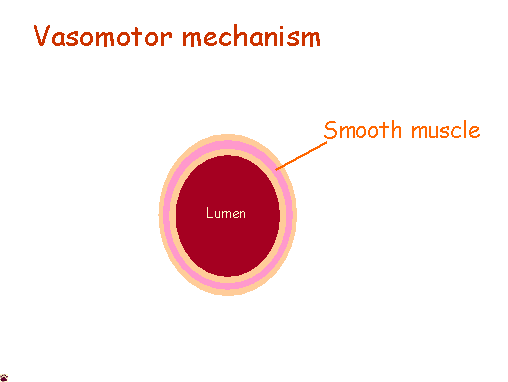
Hot flushes are well recognized as the most characteristic manifestation of menopause. The hot flushes and night sweats of vasomotor instability occur in some 75% of women. They may be more abrupt and more severe in women whose menopause is induced suddenly, by surgery or radiotherapy. In most women, these flushes persist for more than a year, and in 25% of cases they may still be present after 5 years.


When and where do hot flushes occur

Hot flushes may occur at any time of day or night and can be precipitated by a variety of common situations such as sleeping, working, recreation, housework or stress. Flushes usually begin in the face, neck, head or chest. Hot flushes may be associated with episodes of sweating, elevation of skin temperature, irritability, lethargy, insomnia and chronic tiredness. Successful treatment of hot flushes will usually relieve associated symptoms of exhaustion and depression. 


Vaginal Changes

Estrogen is the main female hormone, responsible for all reproductive functions. Menopause is due to estrogen deficiency. This deficiency brings about a lot of changes in sexual organs. Vaginal tissues become thinner and lubrication decreases, thus making intercourse painful.

Is menopause responsible for atrophic changes affecting sexual organs

Estrogen deficiency as a result of menopause leads to atrophic changes and reduced blood flow in the genital tract and urethra. This relative ischaemia is related to the atrophic changes, which occur in the genital tract such as thin skin, sparse hair, and vagina shortening and diminished vaginal and cervical secretion. The consequences of these changes are increasing dyspareunia and apareunia, genital tract trauma, loss of libido, voiding difficulties, painful urination, increased urinary frequency, urgency and incontinence.


How can I combat vaginal infections resulting from menopause

Vaginal tissues become thinner with menopause and therefore become more susceptible to irritation and infections.  Vaginal lubrication could also decrease considerably, making  quite painful.  In this case, the use of water-soluble vaginal lubricants could help mitigate this problem.  Estrogen treatment (through Hormone Replacement Therapy) could also reverse vaginal atrophy.


Muscle & Joint Pains, Hair & Skin Changes

Menopause manifests itself in form of different symptoms. Some women may have frequent muscle and joint pain. Other complaints of menopausal women are dry skin, brittle nails and loss of hair. These changes are due to loss of collagen.

Are muscle and joint pain also due to menopause

Frequent muscle and joint pain may also have the same etiology. The role of collagen loss from the bone matrix in the etiology of postmenopausal osteoporosis may be of fundamental importance.  Many women complain of pain in the joints, especially in the knees around the time of menopause.


Does menopause also affect skin, nails and hair

Women often complain of thin dry skin, brittle nails and loss of hair following menopause. It is wrong to assume that these observations are merely manifestations of female vanity because these subjective changes actually occur due to generalized loss of collagen. This loss of connective tissue is responsible for causing thin translucent inelastic skin in the older woman. 


Estrogen Deficiency

Estrogen Deficiency

Estrogen is a female hormone responsible for female sexual development and reproductive function. It is found in greater amounts in females than males. Estrogen deficiency leads to menopause.

What is estrogen

Estrogen is commonly defined as "any family of steroid hormones that regulate and sustain female sexual development and reproductive function".  Estrogens are steroid hormones, made primarily in the female ovaries and the male testes in humans and animals. Known as the female hormones, estrogens are found in greater amounts in females than males.


Why is estrogen important

These essential molecules influence growth, development and behavior (puberty) regulate reproductive cycles (menstruation, pregnancy) and affect many other body parts (bones, skin, arteries, brain etc.)

Modern scientists also define estrogens as materials that stimulate tissue growth by:

Promoting cell proliferation DNA synthesis and cell division in female sex organs breasts, uterus)
Promoting hypertrophy or increasing a cell size, such as which occurs in female breast and male muscle during puberty and initiating synthesis of specific proteins.
The principal functions of estrogen are to control and regulate the following: uterus and external sexual organs, fallopian tubes, breasts, skeleton, protein deposition, bone density, metabolism and fat deposition, hair distribution and skin.

What are the consequences of estrogen deficiency

The major clinical consequences of the post-menopausal period may be attributed to the estrogen deficiency.  The 'menopausal syndrome' refers to a group of physical and psychological symptoms commonly experienced in the climacteric period due to estrogen deficiency.  But as these symptoms often predate menopause, they are also a result of relative estrogen deficiency as well as to fluctuating levels of ovarian hormones.


Common Symptoms of menopause :

Symptoms of menopause varies from woman to woman. Common symptoms are vaginal dryness, depression, tiredness and headaches. Given here is a list of menopausal symptoms and its frequency.

What are the symptoms of menopause (or estrogen deficiency)

The symptoms of menopause are varied, insidious and can frequently be misdiagnosed as endogenous depression, migraine or general debility. However, vasomotor symptoms and vaginal dryness in association with depression, tiredness and headaches of recent onset are characteristic of menopause or estrogen deficiency (although these may not be the initial presenting symptoms or the most distressing symptoms).

The major long-term problems of menopause include the development of adverse changes in blood lipoprotein concentrations, the generalized atrophy of connective tissues and the progressive reduction in bone mass (risk of osteoporosis).


How common are the various menopausal symptoms

Frequency of menopausal symptoms in women aged 45-54 years.


Complaint % of women
Irritability 92 %
Lethargy 88 %
Depression 78 %
Flushes and night sweats 75 %
Headaches 71 %
Forgetfulness 64 %
Weight gain 61 %
Insomnia 51 %
Joint and muscle pain 48 %
Palpitations 44 %
Crying spells 42 %
Constipation 37 %
Dysuria 20 %
Decreased libido 20 %


Saturday, 2 November 2013

ALL ABOUT SKIN WHITENING

Skin whitening remedies are not limited to expensive beauty and skin treatments or usage of cosmetics. You can try skin whitening remedies at home by using natural ingredients. Read on to know what skin whitening is and which home remedies can be used for whitening skin at home.

Skin whitening is the process of lightening the skin colour with the help of creams, soaps and even injections. Although most of these methods give you the results you are looking forward to, but they are not free from side effects and disadvantages. When you use any skin whitening product, your skin is forced to prevent and distribute the production of its natural skin pigment. All these are done with the help of various toxic chemicals that are present in the products.

One of the most unwanted side effects of constant use of these skin whitening products is discolouration of the skin due to which skin gets dark and almost blackish. It can be seen in patches or on the entire face and neck where the product was used. Other side effects are severe drying of the skin, itching and cracking of skin, liver failure, skin cancer, fetal toxicity in pregnant women, mercury poisoning and many more. The worst thing is that the damages caused by these products are not curable.

Home Remedies for Skin Whitening

There are many ways to lighten your skin and if you opt for home remedies, you will feel that most of them are very helpful. However, when you switch to home remedies, it is for sure that you are not going to suffer from any side effects. But at the same time you will have to be prepared to give some time to get results. Here, you are not going to get them instantly.

Take juice of half lemon, half cucumber and add a pinch of turmeric to it. Apply this on your face and leave it for 10 – 15 minutes. Wash with normal water.

Soak almonds overnight, peel them in the morning and make a paste out of them. Take same amount of honey and add to it. Apply this paste for sometime and wash with normal water.

Take 2 spoons of gram flour and add half spoon lemon juice along with a pinch of turmeric and mix it with milk cream. Apply this paste for sometime on your face and then wash.

Mix equal amounts of fresh coconut milk and fresh pineapple juice and apply it on your face, neck and hands. Wash it after sometime.

Take sandalwood powder, tomato juice, cucumber juice and lemon juice in equal amount and mix them all with clean hands. Apply the paste on your face, neck and hands and then after 15 minutes, wash them.

Dry the orange peels in the sun and grind it. Mix fresh raw milk to make a paste of it and apply it on your skin everyday. Wash your face and other areas with lukewarm water.

You can apply potato juice as they work as bleaching agents. It will even help you get your blemishes and pigmentation reduced.

Mix oatmeal with curd and tomato juice. Apply it and keep it on for at least 20 minutes and then wash.

Applying freshly ground mint leaves on your face will also help lighten your skin colour.

Lime juice is natural bleach. Add a pinch of turmeric powder to it and then keep it on for 15 minutes. Wash your face after that.
The home remedies mentioned above are very helpful especially if you apply them regularly. The only thing you will have to keep in mind is that the results will not come out instantly. It will take time.


Monday, 3 December 2012

Factors of unproven effect on breast cancer risk


Diet and vitamin intake

Many studies have looked for a link between certain diets and breast cancer risk, but so far the results have been conflicting. Some studies have indicated that diet may play a role, while others found no evidence that diet influences breast cancer risk. Studies have looked at the amount of fat in the diet, intake of fruits and vegetables, and intake of meat. No clear link to breast cancer risk was found.
Studies have also looked at vitamin levels, again with inconsistent results. Some studies actually found an increased risk of breast cancer in women with higher levels of certain nutrients. So far, no study has shown that taking vitamins reduces breast cancer risk. This is not to say that there is no point in eating a healthy diet. A diet low in fat, low in red meat and processed meat, and high in fruits and vegetables may have other health benefits.
Most studies have found that breast cancer is less common in countries where the typical diet is low in total fat, low in polyunsaturated fat, and low in saturated fat. But many studies of women in the United States have not linked breast cancer risk to dietary fat intake. Researchers are still not sure how to explain this apparent disagreement. It may be at least partly due to the effect of diet on body weight (see below). Also, studies comparing diet and breast cancer risk in different countries are complicated by other differences (such as activity level, intake of other nutrients, and genetic factors) that might also alter breast cancer risk.
More research is needed to better understand the effect of the types of fat eaten on breast cancer risk. But it is clear that calories do count, and fat is a major source of calories. High-fat diets can lead to being overweight or obese, which is a breast cancer risk factor. A diet high in fat has also been shown to influence the risk of developing several other types of cancer, and intake of certain types of fat is clearly related to heart disease risk.

Antiperspirants

Internet e-mail rumors have suggested that chemicals in underarm antiperspirants are absorbed through the skin, interfere with lymph circulation, and cause toxins to build up in the breast, eventually leading to breast cancer.
There is very little laboratory or population-based evidence to support this rumor. One small study has found trace levels of parabens (used as preservatives in antiperspirants and other products), which have weak estrogen-like properties, in a small sample of breast cancer tumors. However, the study did not look at whether parabens caused the tumors. This was a preliminary finding, and more research is needed to determine what effect, if any, parabens may have on breast cancer risk. On the other hand, a large population-based study found no increase in breast cancer in women who used underarm antiperspirants and/or shaved their underarms.

Bras

Internet e-mail rumors and at least one book have suggested that bras cause breast cancer by obstructing lymph flow. There is no good scientific or clinical basis for this claim. Women who do not wear bras regularly are more likely to be thinner or have less dense breasts, which would probably contribute to any perceived difference in risk.

Induced abortion

Several studies have provided very strong data that neither induced abortions nor spontaneous abortions (miscarriages) have an overall effect on the risk of breast cancer. For more detailed information, see the separate American Cancer Society.

Breast implants

Several studies have found that breast implants do not increase the risk of breast cancer, although silicone breast implants can cause scar tissue to form in the breast. Implants make it harder to see breast tissue on standard mammograms, but additional x-ray pictures called implant displacement views can be used to examine the breast tissue more completely.
Breast implants may be linked to a rare type of lymphoma called anaplastic large cell lymphoma. This lymphoma has rarely been found in the breast tissue around the implants. So far, though, there are too few cases to know if the risk of this lymphoma is really higher in women with implants.

Chemicals in the environment

A great deal of research has been reported and more is being done to understand possible environmental influences on breast cancer risk.
Compounds in the environment that studies in lab animals have found to have estrogen-like properties are of special interest. These could in theory affect breast cancer risk. For example, substances found in some plastics, certain cosmetics and personal care products, pesticides, and PCBs (polychlorinated biphenyls) seem to have such properties.
Although this issue understandably invokes a great deal of public concern, at this time research does not show a clear link between breast cancer risk and exposure to these substances. Unfortunately, studying such effects in humans is difficult. More research is needed to better define the possible health effects of these and similar substances.

Tobacco smoke

For a long time, studies found no link between cigarette smoking and breast cancer. In recent years though, some studies have found that smoking might increase the risk of breast cancer. The increased risk seems to affect certain groups, such as women who started smoking when they were young. In 2009, the International Agency for Research on Cancer concluded that there is limited evidence that tobacco smoking causes breast cancer.
An active focus of research is whether secondhand smoke increases the risk of breast cancer. Both mainstream and secondhand smoke contain chemicals that, in high concentrations, cause breast cancer in rodents. Chemicals in tobacco smoke reach breast tissue and are found in breast milk.
The evidence on secondhand smoke and breast cancer risk in human studies is controversial, at least in part because the link between smoking and breast cancer is also not clear. One possible explanation for this is that tobacco smoke may have different effects on breast cancer risk in smokers compared to those who are just exposed to secondhand smoke.
A report from the California Environmental Protection Agency in 2005 concluded that the evidence about secondhand smoke and breast cancer is "consistent with a causal association" in younger, mainly pre-menopausal women. The 2006 US Surgeon General's report, The Health Consequences of Involuntary Exposure to Tobacco Smoke, concluded that there is "suggestive but not sufficient" evidence of a link at this point. In any case, this possible link to breast cancer is yet another reason to avoid secondhand smoke.

Night work

Several studies have suggested that women who work at night, such as nurses on a night shift, may have an increased risk of developing breast cancer. This is a fairly recent finding, and more studies are looking at this issue. Some researchers think the effect may be due to changes in levels of melatonin, a hormone whose production is affected by the body's exposure to light, but other hormones are also being studied.